
The History of Avaya: Corporate Lineage & Hardware Innovation
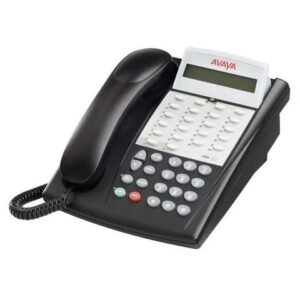
The story of Avaya is essentially the story of modern business communications. Its DNA stretches directly back to Alexander Graham Bell, carrying a legacy of over a century of telecom engineering, bulletproof hardware, and structural corporate spin-offs. This document traces how a single line of innovation moved from the historic Bell System into the powerhouse enterprise systems that ran millions of offices worldwide.
The Corporate Lineage: AT&T to Lucent to Avaya
Avaya didn’t start in a garage; it was born from the largest telecommunications infrastructure on Earth. Its structural evolution reflects the changing landscape of regulatory frameworks and technology modernization over two decades:
The AT&T EraOriginally, the hardware manufacturing and enterprise communication business belonged to AT&T Information Systems (and Western Electric before that). This era was defined by rock-solid analog and early digital PBX (Private Branch Exchange) systems built to standard-issue Bell System specifications.
The Lucent Technologies Spin-OffTo separate its manufacturing arms from its telecom service operations, AT&T spun off its systems and technology unit into Lucent Technologies. Lucent inherited the legendary Bell Labs, bringing an unprecedented wave of research and enterprise hardware development under one roof.
Avaya is BornLucent decided to spin off its enterprise communications group into a standalone company to focus strictly on service-provider networking. This new entity was named Avaya. Avaya took over all corporate business systems, inherited a massive global footprint of installed equipment, and focused entirely on the enterprise market.
Legendary Phone Systems & Engineering Milestones
The transition through these three corporate identities produced some of the most reliable, ubiquitous, and engineered telecom platforms in history.
1. The AT&T Spirit & Merlin Era (The Precursors)
Before newer platforms took over, systems like the AT&T Merlin (introduced in the early 1980s) and the System 25 / System 75 PBXs laid the groundwork. They proved that businesses wanted modularity, programmable buttons, and multi-line flexibility without needing a full-time operator.
2. The Partner Phone System (The Small Business King)
Originally introduced under AT&T, matured under Lucent, and continuously refined by Avaya, the Partner Small Business System (especially the Partner ACS — Advanced Communications System) became the absolute gold standard for small-to-medium businesses.
- Why it was amazing: It was practically indestructible. The system utilized modular expansion slots (like the famous 308EC and 206 modules) that allowed a business to scale lines and stations effortlessly.
- The Legacy: Combined with the iconic Partner 18-button or 34-button Euro style sets, it offered legendary reliability, simple programming, and built-in features like Caller ID and internal page paging that worked flawlessly for decades.
3. Merlin Magix and the “A12” (The Mid-Market Bridge)
As businesses outgrew the Partner system, they stepped into the Merlin Legend and later the Merlin Magix platforms. In this ecosystem, features like the A12 (often referring to specific high-density analog or digital hardware interfaces and station configurations) bridged the gap between basic key systems and massive corporate PBXs. These platforms integrated T1 lines, complex direct inward dialing (DID), and robust centralized voicemail systems like Merlin Mail.
4. Avaya IP Office & The IP400 / IP500 Series
When Avaya took the reins in 2000, the telecom world was beginning its massive structural shift from traditional digital time-division multiplexing (TDM) to Voice over IP (VoIP). Avaya’s answer was the revolutionary IP Office platform, anchored initially by the IP400 series.
- The IP400 Innovation: Introduced in the early 2000s, the IP400 was a hybrid masterpiece. It allowed companies to keep their legacy analog trunks and digital desk phones while seamlessly transitioning to IP trunks (SIP/H.323) and IP phones. It offered massive processing power for voicemail-to-email integration, automated attendants, and multi-site networking.
- Evolution to IP500: The IP400 eventually gave way to the blocky, stackable IP500 and IP500 V2, which became one of the best-selling mid-market telephone systems in history due to its sheer flexibility and rock-solid software stability.
Summary of Architectural Evolution
| Era / Brand | Flagship Systems | Primary Hardware Legacy |
|---|---|---|
| AT&T | Merlin Classic, System 25, Early Partner | Heavy analog/digital engineering, 4-wire proprietary stations, and absolute structural durability. |
| Lucent | Partner ACS, Merlin Legend, Definity G3 | Definity architecture scaling to thousands of users; introduction of unified messaging and early call center routing. |
| Avaya | Merlin Magix, IP400, IP500 V2, Aura | Transition to hybrid and pure IP networks; open standards, SIP trunking, and advanced software-driven communication. |
The True Innovation of Avaya: Unlike competitors who forced clients to rip and replace hardware during tech transitions, Avaya’s greatest engineering feat was backward compatibility. They consistently built modules and circuit cards that allowed a business to run older digital or analog stations right alongside cutting-edge IP infrastructure, preserving millions of dollars in field investments.
Avaya Sales – Avaya Service – Avaya Support